Property constraints
Map setbacks, easements, utilities, septic areas, access, grade, drainage, trees, retaining conditions, and neighboring-property interfaces.
Loading the contractor desk…
LOCAL POOL BUILDER RESEARCH
A broad municipal footprint does not describe one lot. Compare local Pool Builders only after the property, approval path, construction access, and complete finished-yard scope are understood.
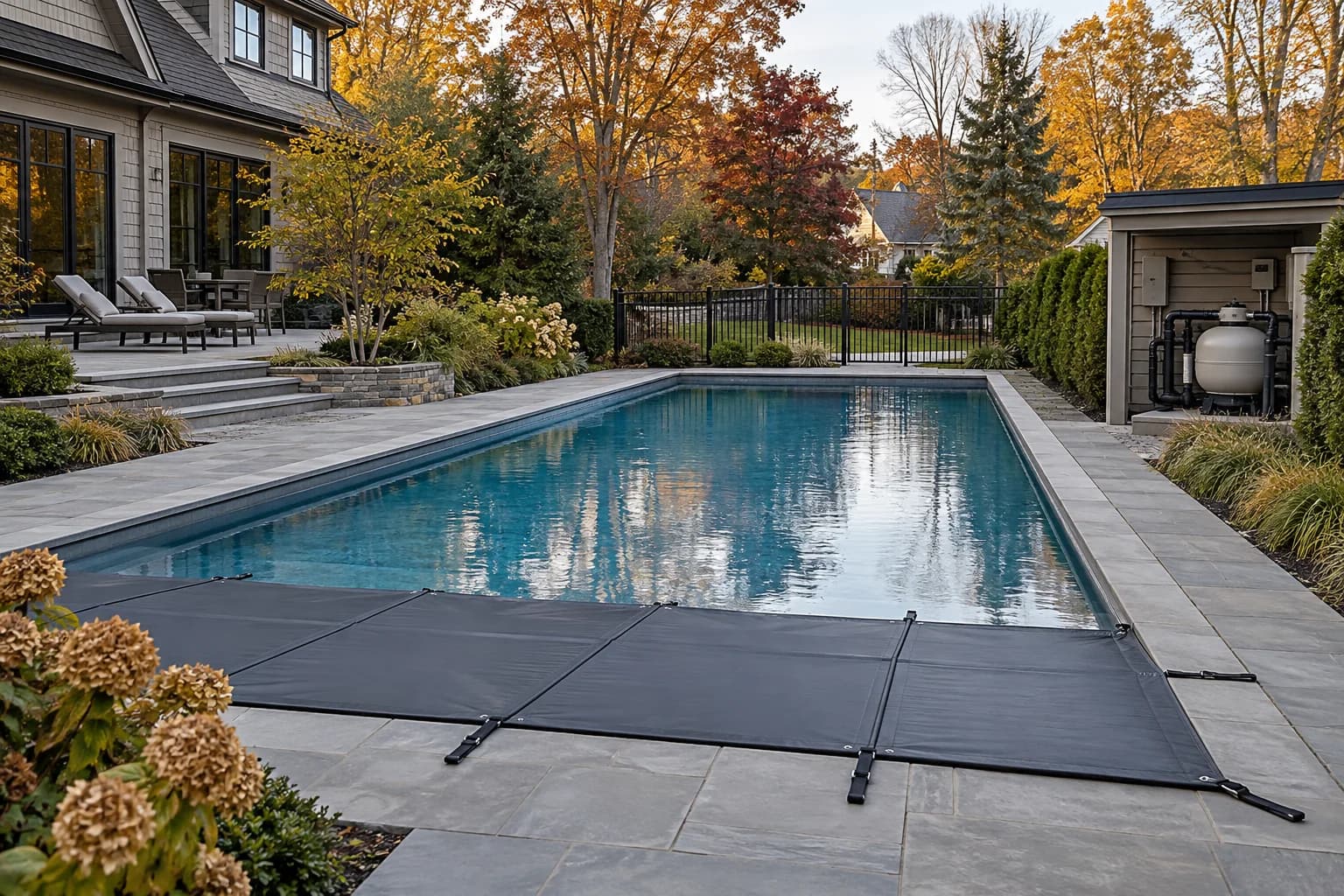
PLAN FOR THE PROPERTY, NOT A GENERIC POOL
Map setbacks, easements, utilities, septic areas, access, grade, drainage, trees, retaining conditions, and neighboring-property interfaces.
Identify zoning, building, trade, barrier, engineering, inspection, and final-approval requirements for the exact address.
Compare the complete construction scope with seasonal operation, maintenance access, utilities, warranties, and long-term service support.
LOCAL RESEARCH STARTING POINTS
Confirm the current service area and every material business, credential, insurance, project, and proposal fact directly.
No Pool Builders are currently available for this location. Use nearby locations and check back as coverage expands.
LOCAL POOL PLANNING GUIDE
The sections below separate verified geographic context, regional planning guidance, and questions that still require an address-specific assessment.
Anaconda-Deer Lodge County, MT has an estimated 13 residents per square mile across its Census land area. Lower citywide density does not prove that a particular property is large, level, accessible, or free of utility, septic, drainage, environmental, or zoning constraints. Ask the Pool Builder to identify which property evidence supports the proposed layout and site-work allowance.
ADDRESS-SPECIFIC LOCAL AUTHORITY CHECK
The directory label does not establish which city, township, county, special district, utility, or unincorporated-area office controls a particular address. Use official property records and the state research below to identify the responsible building, zoning, health, drainage, utility, and trade authorities before relying on a permit checklist.
Find official local-government contacts ↗STATE POOL RULES RESEARCH
Montana licenses public pools under MCA Title 50, Ch. 53. The Department of Public Health and Human Services (DPHHS) sets standards through Circular FCS 3-2022, which incorporates the 2018 ISPSC, and does plan review. County and city health departments inspect and validate the annual licenses. The state building code (ARM Title 24, Ch. 301) is moving to the 2024 I-Codes, including the 2024 ISPSC, on Sept. 26, 2026. By statute, however, it does not reach homes with fewer than five units unless a local government opts in.
Regulator: DPHHS, Food and Consumer Safety Section (EHFS), for rules, plan review and licenses. Local health authorities (e.g., Flathead County) do licensing inspections and enforcement, and licenses are forwarded to local health officers for validation (MCA 50-53-202).
Building code:; State code: ARM 24.301, administered by DLI Building & Commercial Measurements.; In force until Sept. 25, 2026: 2021 IBC and IRC (eff. June 11, 2022), 2023 NEC and 2021 IECC. The state had adopted the 2021 ISPSC.; From Sept. 26, 2026: 2024 IBC, IRC, IEBC and UPC, and 2024 ISPSC (ARM 24.301.175). ISPSC Chapters 7–10 are deleted, and IBC §3109 is replaced by the ISPSC (per the draft rule notice; final text not verified).; MCA 50-60-102 exempts residential buildings with fewer than five units (and their attached structures) from the state code unless a local government adopts it. In practice, residential pool rules apply only in cities and counties with certified code programs.
State barrier / drowning-prevention law: None found for private homes (not verified).
VERIFIED STATE RESEARCH CONTEXT
Montana transitioned its construction-contractor registration program to a contractor license beginning January 1, 2026. Verify the current DLI record and understand that the program does not itself evaluate workmanship quality.
LOCAL BUILDER INTERVIEW
Which legal entity will contract, invoice, supervise, and answer any warranty claim?
Which credentials, permits, inspections, engineering, and barrier requirements apply at this address?
Which recent projects match this pool system, site access, soil, drainage, and finish scope?
Which products, allowances, exclusions, owner responsibilities, and unknown conditions affect the total?
Who owns the schedule, written changes, trade coordination, inspections, commissioning, and closeout documents?
RELATED LOCAL PAGES
FROM SHORTLIST TO SIGNATURE
Build a qualified local shortlist using multiple discovery channels, project fit, verified business details, and consistent screening rather than search position alone.
Read guide →VerificationVerify the contracting entity, required credentials, insurance evidence, responsible people, and public business details before relying on a proposal.
Read guide →PreconstructionTest whether the property can support the intended pool by documenting boundaries, access, grade, utilities, drainage, soil, approvals, barriers, and connected-yard work before detailed pricing.
Read guide →ProposalsNormalize contractor bids into one scope, product, responsibility, risk, and closeout matrix before comparing totals.
Read guide →Project controlPlan barriers, gates, doors, alarms, covers, access control, construction-stage protection, and final inspection as an integrated safety scope confirmed with the local authority.
Read guide →CloseoutCompare structure, shell or liner, interior finish, equipment, accessories, installation, labor, and service commitments by provider, term, exclusions, maintenance conditions, and claim process.
Read guide →OwnershipCoordinate the intended swimming season, temperature, heat source, cover type, energy and water use, safety role, automation, maintenance, and storage before selecting equipment.
Read guide →EquipmentUnderstand saltwater chlorination as a sanitation system—not a pool construction type—and coordinate equipment, materials, operation, testing, maintenance, and warranty requirements.
Read guide →OwnershipANACONDA-DEER LODGE COUNTY, MT POOL BUILDER FAQ
Use the Pool Builders shown here to form an initial longlist. Then confirm service area, legal identity, required credentials, current insurance evidence, comparable work, references, and a complete written proposal directly.
Match the legal name on the proposal to official business and licensing sources where applicable. Confirm the responsible people, insurance evidence, permit roles, recent comparable work, references, and warranty provider.
Montana licenses public pools under MCA Title 50, Ch. 53. The Department of Public Health and Human Services (DPHHS) sets standards through Circular FCS 3-2022, which incorporates the 2018 ISPSC, and does plan review. County and city health departments inspect and validate the annual licenses. The state building code (ARM Title 24, Ch. 301) is moving to the 2024 I-Codes, including the 2024 ISPSC, on Sept. 26, 2026. By statute, however, it does not reach homes with fewer than five units unless a local government opts in. Use the cited state research as a starting point, then confirm current requirements with the building, zoning, health, utility, and trade authorities responsible for the project address.
The proposal should respond to the actual survey, access, utilities, easements, grade, drainage, soil or groundwater information, neighboring property, barriers, and restoration needs. Use the Anaconda-Deer Lodge County, MT planning priorities above as interview prompts.
A useful proposal defines design, approvals, access, excavation, structure, plumbing, electrical work, equipment, finishes, decking, drainage, barriers, cleanup, allowances, exclusions, owner work, schedule assumptions, and closeout deliverables.
Compare proposals only after normalizing scope and responsibility. A lower price can reflect a different specification, missing work, larger allowances, or risks left to the owner.
Combines a supporting wall and floor system with a replaceable liner. Review groundwater management, liner measurement, fittings, coping, deck interfaces, care limitations, replacement access, and local service support.
Match dimensions and depth to actual swimming, exercise, play, accessibility, and supervision goals. A larger site does not remove the need to coordinate circulation, barriers, equipment, drainage, and long-term maintenance access.
May change excavation and structural scope, but still requires property-specific review of support, grade, drainage, access, barriers, electrical work, decking, manufacturer instructions, local approvals, and eventual replacement.
Saltwater describes a sanitation approach rather than a pool structure. Heating, spas, covers, automation, lighting, water features, and infinity edges add separate hydraulic, structural, energy, safety, maintenance, and warranty decisions.
WEATHER AND SEASONAL USE
Anaconda-Deer Lodge County, MT planning should address the intended swimming season, heating and cover strategy, freeze protection, winterization responsibility, snow or off-season access where relevant, spring commissioning, and the location of equipment that must be drained or serviced. These are regional planning prompts—not a claim about conditions on every property. Ask each Pool Builder to state the weather assumptions built into its structure, plumbing, deck, equipment, schedule, and warranty terms.
Check official National Weather Service climate resources ↗COST AND PROJECT BOUNDARY
Do not treat a national average or price-per-square-foot figure as a verified Anaconda-Deer Lodge County, MT project cost. Establish one finished-project boundary and compare design, surveys, engineering, permits, access, demolition, excavation, soil or groundwater response, structure or shell, plumbing, electrical and gas work, equipment, finish, coping, deck, drainage, barriers, landscaping, restoration, startup, and closeout. Separate fixed selections from allowances, unit rates, alternates, owner-direct work, taxes, escalation terms, and unresolved conditions. For ownership, compare water, energy, chemicals, cleaning, seasonal service, covers, consumables, repairs, and eventual finish or liner work using the actual proposed system.
Use the complete cost checklist →Estimate pool volume →This is educational research, not a permit determination or legal advice. Public-pool rules often differ from private residential rules. Confirm the project classification and every current requirement with the authority for the exact address.
Turn routine, weather-related, opening, closing, water-efficiency, and service tasks into a documented ownership plan tied to the installed pool and local conditions.
Design decisions, surveys, engineering, authority review, utility coordination, access preparation, weather, inspections, owner changes, concealed conditions, materials, and subcontractor sequencing can all affect progress. Ask for dependencies and recovery steps, not only a completion date.
No. Pool Builders support discovery. Pool Builders Pro does not rank, endorse, credential, quote, or confirm the availability of the businesses shown.
Anaconda-Deer Lodge County, MT has an estimated 13 residents per square mile across its Census land area. Lower citywide density does not prove that a particular property is large, level, accessible, or free of utility, septic, drainage, environmental, or zoning constraints. Ask the Pool Builder to identify which property evidence supports the proposed layout and site-work allowance. The data is useful context, not a statement about a particular household, lot, budget, or preference.
Possibly, but a smaller pool does not remove access, setback, utility, drainage, equipment, barrier, deck-circulation, or approval constraints. Compare measured concepts and the complete finished-yard scope.
Anaconda-Deer Lodge County, MT planning should address the intended swimming season, heating and cover strategy, freeze protection, winterization responsibility, snow or off-season access where relevant, spring commissioning, and the location of equipment that must be drained or serviced. These are regional planning prompts—not a claim about conditions on every property. Ask each Pool Builder to state the weather assumptions built into its structure, plumbing, deck, equipment, schedule, and warranty terms. Compare the intended season and operating outcome before selecting equipment rather than treating heating or a cover as an isolated add-on.
Do not treat a national average or price-per-square-foot figure as a verified Anaconda-Deer Lodge County, MT project cost. Establish one finished-project boundary and compare design, surveys, engineering, permits, access, demolition, excavation, soil or groundwater response, structure or shell, plumbing, electrical and gas work, equipment, finish, coping, deck, drainage, barriers, landscaping, restoration, startup, and closeout. Separate fixed selections from allowances, unit rates, alternates, owner-direct work, taxes, escalation terms, and unresolved conditions. For ownership, compare water, energy, chemicals, cleaning, seasonal service, covers, consumables, repairs, and eventual finish or liner work using the actual proposed system.