Property constraints
Map setbacks, easements, utilities, septic areas, access, grade, drainage, trees, retaining conditions, and neighboring-property interfaces.
Loading the contractor desk…
STATE POOL BUILDER RESEARCH
Compare Pool Builders across Nebraska while accounting for regional differences in climate, ground conditions, water, approvals, and the availability of qualified trades.
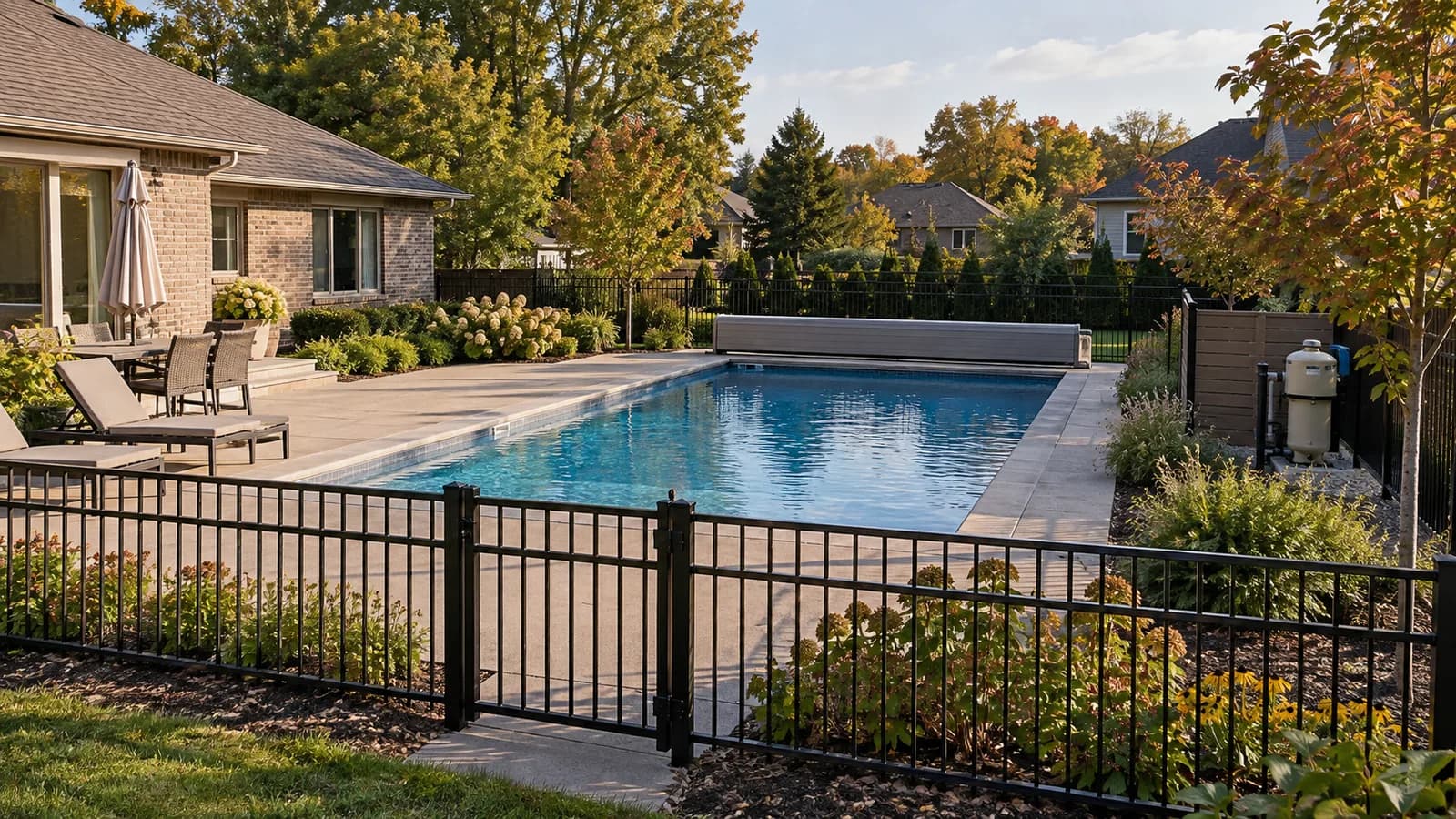
PLAN FOR THE PROPERTY, NOT A GENERIC POOL
Map setbacks, easements, utilities, septic areas, access, grade, drainage, trees, retaining conditions, and neighboring-property interfaces.
Identify zoning, building, trade, barrier, engineering, inspection, and final-approval requirements for the exact address.
Compare the complete construction scope with seasonal operation, maintenance access, utilities, warranties, and long-term service support.
LOCAL RESEARCH STARTING POINTS
Confirm the current service area and every material business, credential, insurance, project, and proposal fact directly.
No Pool Builders are currently available for this location. Use nearby locations and check back as coverage expands.
LOCAL POOL PLANNING GUIDE
The sections below separate verified geographic context, regional planning guidance, and questions that still require an address-specific assessment.
Citywide averages cannot establish the usable area, access, utilities, drainage, or approval path for one address in Nebraska. Start with current property documents and a measured site review, then keep assumptions visible until the responsible authority or qualified professional confirms them.
STATE POOL RULES RESEARCH
Nebraska's public pool rules are Title 178 NAC 2. LB 759 (2026) changed who enforces them. Effective July 18, 2026, the state Department of Water, Energy and Environment (DWEE) no longer issues operating permits, does sanitation inspections or certifies operators. That authority moved to the local government with jurisdiction, often acting through local health departments. DWEE still does engineering plan review and construction permits. There is no statewide residential enforcement; cities adopt codes, and Lincoln, for example, has its own pool-fence ordinance.
Regulator:; DWEE Engineering: plan review and construction permits.; Local governments or local health departments: operating permits, inspections and enforcement. For example, Two Rivers PHD took over 7 counties on July 18, 2026 (Resolution 2026-2), and North Central DHD adopted regulations in Aug. 2026.; Neb. Rev. Stat. 81-15,268 (as amended by LB 759, §29, operative July 18, 2026): "The local government which exercises jurisdiction over a swimming pool shall inspect" it against the local government's minimum requirements. Inspection fees may not exceed actual cost.
Building code: State building code under Neb. Rev. Stat. 71-6403 = 2018 IBC, 2018 IRC, 2018 IEBC and 2018 UPC (last amended 2021, LB 131). Local governments adopt and enforce codes (71-6406). ISPSC adoption: not verified.
State barrier / drowning-prevention law: None found (not verified).
VERIFIED STATE RESEARCH CONTEXT
Nebraska requires construction contractors and subcontractors to register with the Department of Labor. Registration supports compliance administration but does not ensure work quality or protect against fraud.
LOCAL BUILDER INTERVIEW
Which legal entity will contract, invoice, supervise, and answer any warranty claim?
Which credentials, permits, inspections, engineering, and barrier requirements apply at this address?
Which recent projects match this pool system, site access, soil, drainage, and finish scope?
Which products, allowances, exclusions, owner responsibilities, and unknown conditions affect the total?
Who owns the schedule, written changes, trade coordination, inspections, commissioning, and closeout documents?
RELATED LOCAL PAGES
FROM SHORTLIST TO SIGNATURE
Build a qualified local shortlist using multiple discovery channels, project fit, verified business details, and consistent screening rather than search position alone.
Read guide →VerificationVerify the contracting entity, required credentials, insurance evidence, responsible people, and public business details before relying on a proposal.
Read guide →PreconstructionTest whether the property can support the intended pool by documenting boundaries, access, grade, utilities, drainage, soil, approvals, barriers, and connected-yard work before detailed pricing.
Read guide →ProposalsNormalize contractor bids into one scope, product, responsibility, risk, and closeout matrix before comparing totals.
Read guide →Project controlPlan barriers, gates, doors, alarms, covers, access control, construction-stage protection, and final inspection as an integrated safety scope confirmed with the local authority.
Read guide →CloseoutCompare structure, shell or liner, interior finish, equipment, accessories, installation, labor, and service commitments by provider, term, exclusions, maintenance conditions, and claim process.
Read guide →OwnershipCoordinate the intended swimming season, temperature, heat source, cover type, energy and water use, safety role, automation, maintenance, and storage before selecting equipment.
Read guide →EquipmentUnderstand saltwater chlorination as a sanitation system—not a pool construction type—and coordinate equipment, materials, operation, testing, maintenance, and warranty requirements.
Read guide →OwnershipNEBRASKA POOL BUILDER FAQ
Use the Pool Builders shown here to form an initial longlist. Then confirm service area, legal identity, required credentials, current insurance evidence, comparable work, references, and a complete written proposal directly.
Match the legal name on the proposal to official business and licensing sources where applicable. Confirm the responsible people, insurance evidence, permit roles, recent comparable work, references, and warranty provider.
Nebraska's public pool rules are Title 178 NAC 2. LB 759 (2026) changed who enforces them. Effective July 18, 2026, the state Department of Water, Energy and Environment (DWEE) no longer issues operating permits, does sanitation inspections or certifies operators. That authority moved to the local government with jurisdiction, often acting through local health departments. DWEE still does engineering plan review and construction permits. There is no statewide residential enforcement; cities adopt codes, and Lincoln, for example, has its own pool-fence ordinance. Use the cited state research as a starting point, then confirm current requirements with the building, zoning, health, utility, and trade authorities responsible for the project address.
The proposal should respond to the actual survey, access, utilities, easements, grade, drainage, soil or groundwater information, neighboring property, barriers, and restoration needs. Use the Nebraska planning priorities above as interview prompts.
A useful proposal defines design, approvals, access, excavation, structure, plumbing, electrical work, equipment, finishes, decking, drainage, barriers, cleanup, allowances, exclusions, owner work, schedule assumptions, and closeout deliverables.
Compare proposals only after normalizing scope and responsibility. A lower price can reflect a different specification, missing work, larger allowances, or risks left to the owner.
Design decisions, surveys, engineering, authority review, utility coordination, access preparation, weather, inspections, owner changes, concealed conditions, materials, and subcontractor sequencing can all affect progress. Ask for dependencies and recovery steps, not only a completion date.
WEATHER AND SEASONAL USE
Nebraska planning should address the intended swimming season, heating and cover strategy, freeze protection, winterization responsibility, snow or off-season access where relevant, spring commissioning, and the location of equipment that must be drained or serviced. These are regional planning prompts—not a claim about conditions on every property. Ask each Pool Builder to state the weather assumptions built into its structure, plumbing, deck, equipment, schedule, and warranty terms.
COST AND PROJECT BOUNDARY
Do not treat a national average or price-per-square-foot figure as a verified Nebraska project cost. Establish one finished-project boundary and compare design, surveys, engineering, permits, access, demolition, excavation, soil or groundwater response, structure or shell, plumbing, electrical and gas work, equipment, finish, coping, deck, drainage, barriers, landscaping, restoration, startup, and closeout. Separate fixed selections from allowances, unit rates, alternates, owner-direct work, taxes, escalation terms, and unresolved conditions. For ownership, compare water, energy, chemicals, cleaning, seasonal service, covers, consumables, repairs, and eventual finish or liner work using the actual proposed system.
Use the complete cost checklist →Estimate pool volume →This is educational research, not a permit determination or legal advice. Public-pool rules often differ from private residential rules. Confirm the project classification and every current requirement with the authority for the exact address.
Turn routine, weather-related, opening, closing, water-efficiency, and service tasks into a documented ownership plan tied to the installed pool and local conditions.
No. Pool Builders support discovery. Pool Builders Pro does not rank, endorse, credential, quote, or confirm the availability of the businesses shown.