Property constraints
Map setbacks, easements, utilities, septic areas, access, grade, drainage, trees, retaining conditions, and neighboring-property interfaces.
Loading the contractor desk…
LOCAL POOL BUILDER RESEARCH
Use the official locality boundary as context—not a lot survey. Compare local Pool Builders only after the property, approval path, construction access, and complete finished-yard scope are understood.
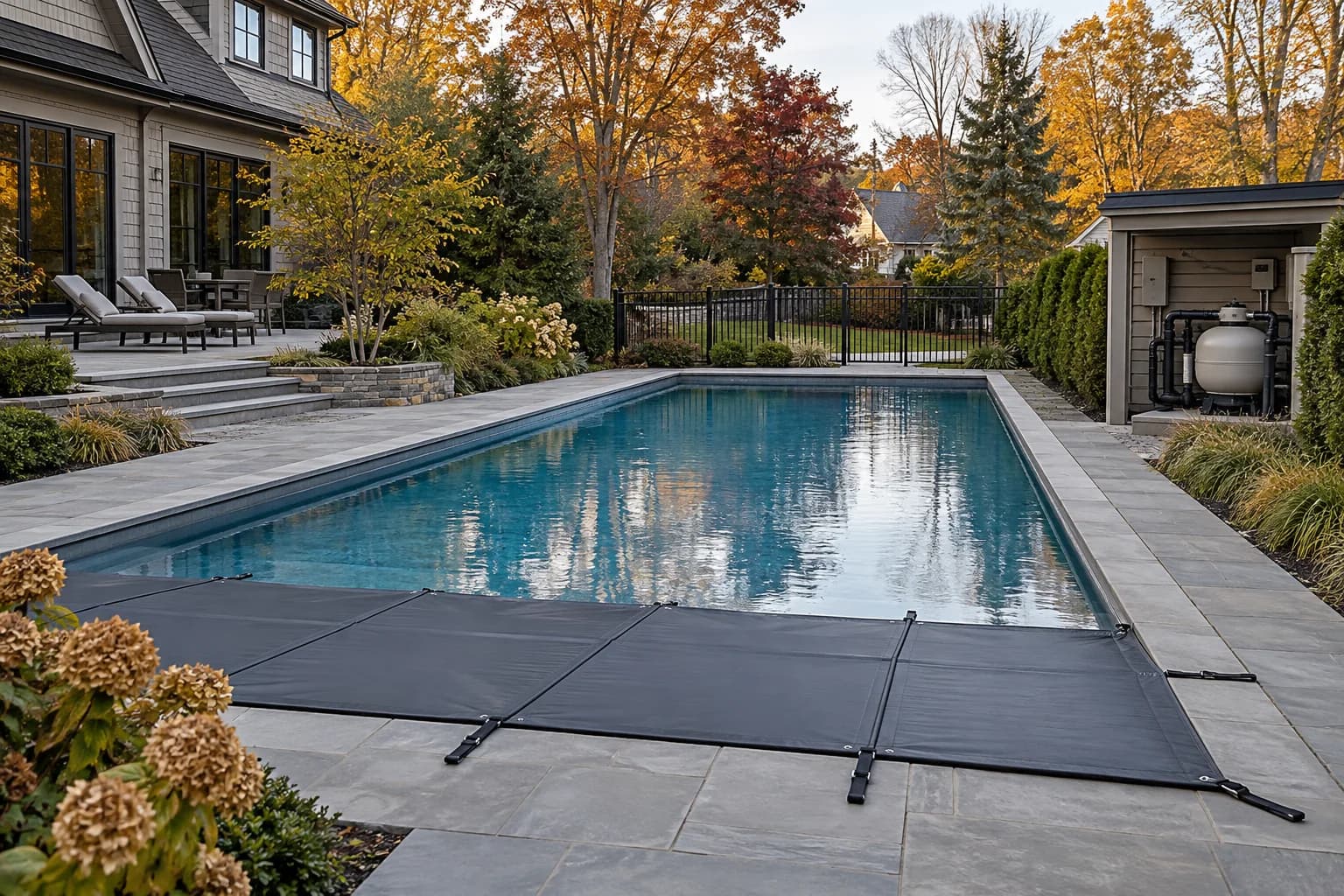
PLAN FOR THE PROPERTY, NOT A GENERIC POOL
Map setbacks, easements, utilities, septic areas, access, grade, drainage, trees, retaining conditions, and neighboring-property interfaces.
Identify zoning, building, trade, barrier, engineering, inspection, and final-approval requirements for the exact address.
Compare the complete construction scope with seasonal operation, maintenance access, utilities, warranties, and long-term service support.
LOCAL RESEARCH STARTING POINTS
Confirm the current service area and every material business, credential, insurance, project, and proposal fact directly.
Pool builders
LOCAL POOL PLANNING GUIDE
The sections below separate verified geographic context, regional planning guidance, and questions that still require an address-specific assessment.
U.S. Census Bureau identifies Aston township as a township and provides a representative point and land-area record, but not a current population estimate for this geography. That official classification helps distinguish the locality from an incorporated city; it still cannot establish usable area, access, setbacks, easements, utilities, drainage, or approvals for one Aston Township, PA address. Start with current property documents and a measured site review.
ADDRESS-SPECIFIC LOCAL AUTHORITY CHECK
The directory label does not establish which city, township, county, special district, utility, or unincorporated-area office controls a particular address. Use official property records and the state research below to identify the responsible building, zoning, health, drainage, utility, and trade authorities before relying on a permit checklist.
Find official local-government contacts ↗STATE POOL RULES RESEARCH
The Pennsylvania Department of Health (DOH) permits public bathing places under the 1931 Public Bathing Law and an old rule, 28 Pa. Code Ch. 18, most of which dates from 1971–74. County and municipal health departments also play a role. Construction of both commercial and residential pools falls under the statewide Uniform Construction Code (UCC). The UCC moved to the 2021 I-codes, including the 2021 ISPSC, for permits filed on or after Jan. 1, 2026. There is no state contractor license, only registration with the Attorney General for home-improvement work.
Regulator: DOH, Bureau of Community Health Systems, with District Office environmental health specialists. Ch. 18 also refers to local health departments set up under the Local Health Administration Law; the list of which ones run pool programs is not verified. Construction standards are enforced by local UCC code officials or by the Department of Labor & Industry (L&I).
Building code: The statewide UCC adopted the 2021 IRC and 2021 ISPSC (with 2020 NEC via the 2021 IBC) for permits submitted on or after Jan. 1, 2026 (Pa. Bulletin, Nov. 8, 2025). Before that the 2018 codes applied. For residential work, contracts signed before Jan. 1, 2026 may use the 2018 codes if permits are applied for by June 30, 2026.
State barrier / drowning-prevention law: No separate statute found. Barriers follow the ISPSC/IRC through the UCC.
VERIFIED STATE RESEARCH CONTEXT
Pennsylvania does not license most construction contractors statewide, but most home-improvement contractors must register with the Attorney General and comply with insurance and contract requirements. Municipal rules may also apply.
LOCAL BUILDER INTERVIEW
Which legal entity will contract, invoice, supervise, and answer any warranty claim?
Which credentials, permits, inspections, engineering, and barrier requirements apply at this address?
Which recent projects match this pool system, site access, soil, drainage, and finish scope?
Which products, allowances, exclusions, owner responsibilities, and unknown conditions affect the total?
Who owns the schedule, written changes, trade coordination, inspections, commissioning, and closeout documents?
RELATED LOCAL PAGES
FROM SHORTLIST TO SIGNATURE
Build a qualified local shortlist using multiple discovery channels, project fit, verified business details, and consistent screening rather than search position alone.
Read guide →VerificationVerify the contracting entity, required credentials, insurance evidence, responsible people, and public business details before relying on a proposal.
Read guide →PreconstructionTest whether the property can support the intended pool by documenting boundaries, access, grade, utilities, drainage, soil, approvals, barriers, and connected-yard work before detailed pricing.
Read guide →ProposalsNormalize contractor bids into one scope, product, responsibility, risk, and closeout matrix before comparing totals.
Read guide →Project controlPlan barriers, gates, doors, alarms, covers, access control, construction-stage protection, and final inspection as an integrated safety scope confirmed with the local authority.
Read guide →CloseoutCompare structure, shell or liner, interior finish, equipment, accessories, installation, labor, and service commitments by provider, term, exclusions, maintenance conditions, and claim process.
Read guide →OwnershipCoordinate the intended swimming season, temperature, heat source, cover type, energy and water use, safety role, automation, maintenance, and storage before selecting equipment.
Read guide →EquipmentUnderstand saltwater chlorination as a sanitation system—not a pool construction type—and coordinate equipment, materials, operation, testing, maintenance, and warranty requirements.
Read guide →OwnershipASTON TOWNSHIP, PA POOL BUILDER FAQ
Use the Pool Builders shown here to form an initial longlist. Then confirm service area, legal identity, required credentials, current insurance evidence, comparable work, references, and a complete written proposal directly.
Match the legal name on the proposal to official business and licensing sources where applicable. Confirm the responsible people, insurance evidence, permit roles, recent comparable work, references, and warranty provider.
The Pennsylvania Department of Health (DOH) permits public bathing places under the 1931 Public Bathing Law and an old rule, 28 Pa. Code Ch. 18, most of which dates from 1971–74. County and municipal health departments also play a role. Construction of both commercial and residential pools falls under the statewide Uniform Construction Code (UCC). The UCC moved to the 2021 I-codes, including the 2021 ISPSC, for permits filed on or after Jan. 1, 2026. There is no state contractor license, only registration with the Attorney General for home-improvement work. Use the cited state research as a starting point, then confirm current requirements with the building, zoning, health, utility, and trade authorities responsible for the project address.
The proposal should respond to the actual survey, access, utilities, easements, grade, drainage, soil or groundwater information, neighboring property, barriers, and restoration needs. Use the Aston Township, PA planning priorities above as interview prompts.
A useful proposal defines design, approvals, access, excavation, structure, plumbing, electrical work, equipment, finishes, decking, drainage, barriers, cleanup, allowances, exclusions, owner work, schedule assumptions, and closeout deliverables.
Compare proposals only after normalizing scope and responsibility. A lower price can reflect a different specification, missing work, larger allowances, or risks left to the owner.
Design decisions, surveys, engineering, authority review, utility coordination, access preparation, weather, inspections, owner changes, concealed conditions, materials, and subcontractor sequencing can all affect progress. Ask for dependencies and recovery steps, not only a completion date.
Match dimensions and depth to actual swimming, exercise, play, accessibility, and supervision goals. A larger site does not remove the need to coordinate circulation, barriers, equipment, drainage, and long-term maintenance access.
May change excavation and structural scope, but still requires property-specific review of support, grade, drainage, access, barriers, electrical work, decking, manufacturer instructions, local approvals, and eventual replacement.
Saltwater describes a sanitation approach rather than a pool structure. Heating, spas, covers, automation, lighting, water features, and infinity edges add separate hydraulic, structural, energy, safety, maintenance, and warranty decisions.
WEATHER AND SEASONAL USE
Aston Township, PA planning should address the intended swimming season, heating and cover strategy, freeze protection, winterization responsibility, snow or off-season access where relevant, spring commissioning, and the location of equipment that must be drained or serviced. These are regional planning prompts—not a claim about conditions on every property. Ask each Pool Builder to state the weather assumptions built into its structure, plumbing, deck, equipment, schedule, and warranty terms.
Check official National Weather Service climate resources ↗COST AND PROJECT BOUNDARY
Do not treat a national average or price-per-square-foot figure as a verified Aston Township, PA project cost. Establish one finished-project boundary and compare design, surveys, engineering, permits, access, demolition, excavation, soil or groundwater response, structure or shell, plumbing, electrical and gas work, equipment, finish, coping, deck, drainage, barriers, landscaping, restoration, startup, and closeout. Separate fixed selections from allowances, unit rates, alternates, owner-direct work, taxes, escalation terms, and unresolved conditions. For ownership, compare water, energy, chemicals, cleaning, seasonal service, covers, consumables, repairs, and eventual finish or liner work using the actual proposed system.
Use the complete cost checklist →Estimate pool volume →This is educational research, not a permit determination or legal advice. Public-pool rules often differ from private residential rules. Confirm the project classification and every current requirement with the authority for the exact address.
Turn routine, weather-related, opening, closing, water-efficiency, and service tasks into a documented ownership plan tied to the installed pool and local conditions.
No. Pool Builders support discovery. Pool Builders Pro does not rank, endorse, credential, quote, or confirm the availability of the businesses shown.
U.S. Census Bureau identifies Aston township as a township and provides a representative point and land-area record, but not a current population estimate for this geography. That official classification helps distinguish the locality from an incorporated city; it still cannot establish usable area, access, setbacks, easements, utilities, drainage, or approvals for one Aston Township, PA address. Start with current property documents and a measured site review. The data is useful context, not a statement about a particular household, lot, budget, or preference.
Possibly, but a smaller pool does not remove access, setback, utility, drainage, equipment, barrier, deck-circulation, or approval constraints. Compare measured concepts and the complete finished-yard scope.
Aston Township, PA planning should address the intended swimming season, heating and cover strategy, freeze protection, winterization responsibility, snow or off-season access where relevant, spring commissioning, and the location of equipment that must be drained or serviced. These are regional planning prompts—not a claim about conditions on every property. Ask each Pool Builder to state the weather assumptions built into its structure, plumbing, deck, equipment, schedule, and warranty terms. Compare the intended season and operating outcome before selecting equipment rather than treating heating or a cover as an isolated add-on.
Do not treat a national average or price-per-square-foot figure as a verified Aston Township, PA project cost. Establish one finished-project boundary and compare design, surveys, engineering, permits, access, demolition, excavation, soil or groundwater response, structure or shell, plumbing, electrical and gas work, equipment, finish, coping, deck, drainage, barriers, landscaping, restoration, startup, and closeout. Separate fixed selections from allowances, unit rates, alternates, owner-direct work, taxes, escalation terms, and unresolved conditions. For ownership, compare water, energy, chemicals, cleaning, seasonal service, covers, consumables, repairs, and eventual finish or liner work using the actual proposed system.