Property constraints
Map setbacks, easements, utilities, septic areas, access, grade, drainage, trees, retaining conditions, and neighboring-property interfaces.
Loading the contractor desk…
LOCAL POOL BUILDER RESEARCH
A broad municipal footprint does not describe one lot. Compare local Pool Builders only after the property, approval path, construction access, and complete finished-yard scope are understood.
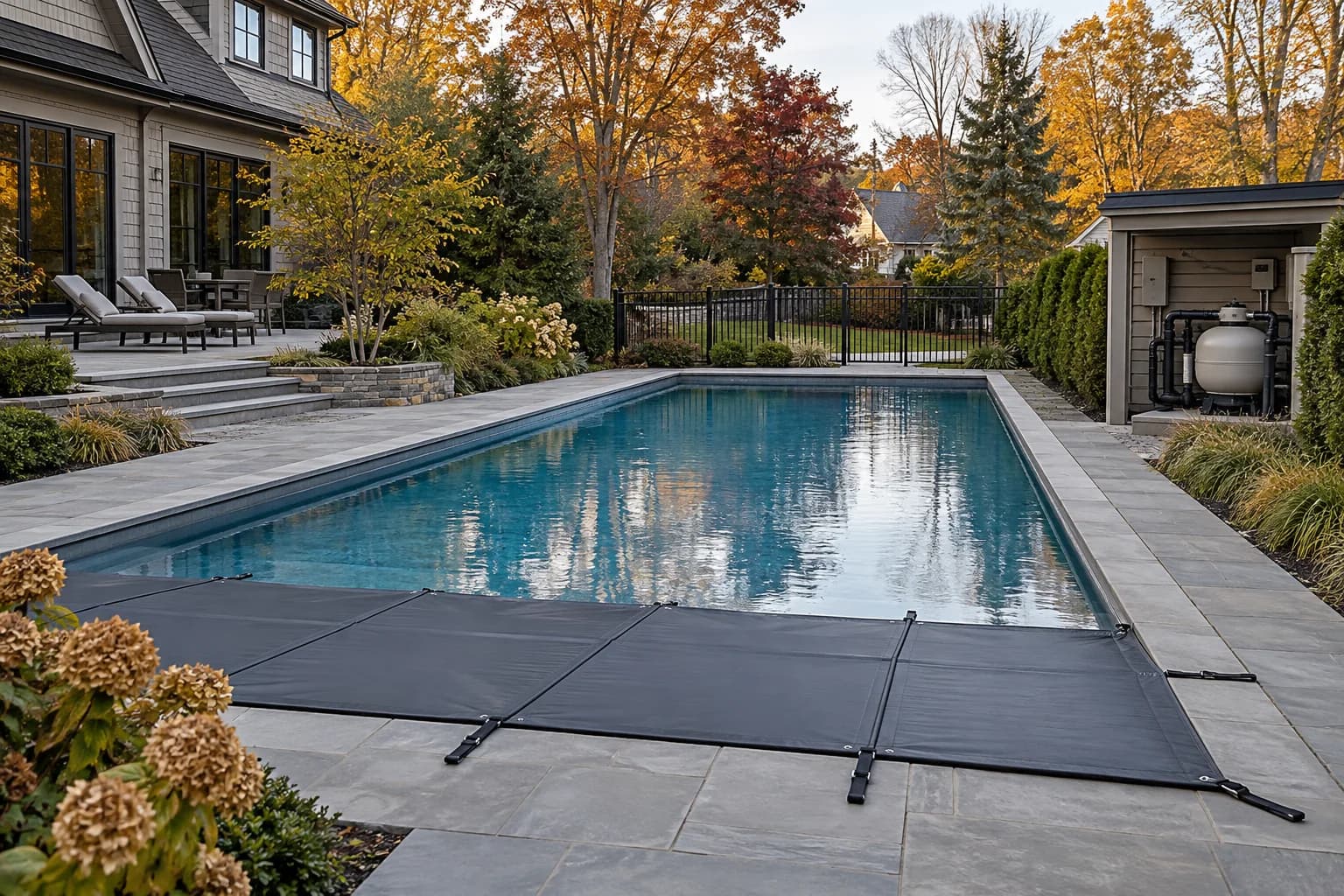
PLAN FOR THE PROPERTY, NOT A GENERIC POOL
Map setbacks, easements, utilities, septic areas, access, grade, drainage, trees, retaining conditions, and neighboring-property interfaces.
Identify zoning, building, trade, barrier, engineering, inspection, and final-approval requirements for the exact address.
Compare the complete construction scope with seasonal operation, maintenance access, utilities, warranties, and long-term service support.
LOCAL RESEARCH STARTING POINTS
Confirm the current service area and every material business, credential, insurance, project, and proposal fact directly.
Pool builders
LOCAL POOL PLANNING GUIDE
The sections below separate verified geographic context, regional planning guidance, and questions that still require an address-specific assessment.
Oak Creek, WI has an estimated 1,349 residents per square mile across its Census land area. Lower citywide density does not prove that a particular property is large, level, accessible, or free of utility, septic, drainage, environmental, or zoning constraints. Ask the Pool Builder to identify which property evidence supports the proposed layout and site-work allowance.
ADDRESS-SPECIFIC LOCAL AUTHORITY CHECK
The directory label does not establish which city, township, county, special district, utility, or unincorporated-area office controls a particular address. Use official property records and the state research below to identify the responsible building, zoning, health, drainage, utility, and trade authorities before relying on a permit checklist.
Find official local-government contacts ↗STATE POOL RULES RESEARCH
Wisconsin splits public-pool oversight between two agencies. DSPS reviews design and construction under SPS 390, and plans must come from a Wisconsin-registered engineer. DATCP licenses and inspects operations under ATCP 76, which was substantially revised effective Sept. 24, 2023. Private residential pools have no state pool code; they are handled by local ordinance.
Regulator:; Construction: Department of Safety and Professional Services (DSPS), Division of Industry Services. The City of Milwaukee inspects construction itself (Department of Neighborhood Services).; Operation and licensing: Department of Agriculture, Trade and Consumer Protection (DATCP). DATCP or its local agent health departments inspect.
Building code: The Uniform Dwelling Code (SPS 320–325) is the statewide code for 1- and 2-family homes and is enforced in all municipalities. It is a state-written code, not the IRC. No UDC provisions for residential pools were found, so residential pools are regulated by local ordinance (not verified in detail).
State barrier law: None was found.
VERIFIED STATE RESEARCH CONTEXT
Wisconsin administers dwelling-contractor and dwelling-contractor qualifier credentials through the Department of Safety and Professional Services, alongside separately regulated construction trades.
LOCAL BUILDER INTERVIEW
Which legal entity will contract, invoice, supervise, and answer any warranty claim?
Which credentials, permits, inspections, engineering, and barrier requirements apply at this address?
Which recent projects match this pool system, site access, soil, drainage, and finish scope?
Which products, allowances, exclusions, owner responsibilities, and unknown conditions affect the total?
Who owns the schedule, written changes, trade coordination, inspections, commissioning, and closeout documents?
RELATED LOCAL PAGES
FROM SHORTLIST TO SIGNATURE
Build a qualified local shortlist using multiple discovery channels, project fit, verified business details, and consistent screening rather than search position alone.
Read guide →VerificationVerify the contracting entity, required credentials, insurance evidence, responsible people, and public business details before relying on a proposal.
Read guide →PreconstructionTest whether the property can support the intended pool by documenting boundaries, access, grade, utilities, drainage, soil, approvals, barriers, and connected-yard work before detailed pricing.
Read guide →ProposalsNormalize contractor bids into one scope, product, responsibility, risk, and closeout matrix before comparing totals.
Read guide →Project controlPlan barriers, gates, doors, alarms, covers, access control, construction-stage protection, and final inspection as an integrated safety scope confirmed with the local authority.
Read guide →CloseoutCompare structure, shell or liner, interior finish, equipment, accessories, installation, labor, and service commitments by provider, term, exclusions, maintenance conditions, and claim process.
Read guide →OwnershipCoordinate the intended swimming season, temperature, heat source, cover type, energy and water use, safety role, automation, maintenance, and storage before selecting equipment.
Read guide →EquipmentUnderstand saltwater chlorination as a sanitation system—not a pool construction type—and coordinate equipment, materials, operation, testing, maintenance, and warranty requirements.
Read guide →OwnershipOAK CREEK, WI POOL BUILDER FAQ
Use the Pool Builders shown here to form an initial longlist. Then confirm service area, legal identity, required credentials, current insurance evidence, comparable work, references, and a complete written proposal directly.
Match the legal name on the proposal to official business and licensing sources where applicable. Confirm the responsible people, insurance evidence, permit roles, recent comparable work, references, and warranty provider.
Wisconsin splits public-pool oversight between two agencies. DSPS reviews design and construction under SPS 390, and plans must come from a Wisconsin-registered engineer. DATCP licenses and inspects operations under ATCP 76, which was substantially revised effective Sept. 24, 2023. Private residential pools have no state pool code; they are handled by local ordinance. Use the cited state research as a starting point, then confirm current requirements with the building, zoning, health, utility, and trade authorities responsible for the project address.
The proposal should respond to the actual survey, access, utilities, easements, grade, drainage, soil or groundwater information, neighboring property, barriers, and restoration needs. Use the Oak Creek, WI planning priorities above as interview prompts.
A useful proposal defines design, approvals, access, excavation, structure, plumbing, electrical work, equipment, finishes, decking, drainage, barriers, cleanup, allowances, exclusions, owner work, schedule assumptions, and closeout deliverables.
Compare proposals only after normalizing scope and responsibility. A lower price can reflect a different specification, missing work, larger allowances, or risks left to the owner.
Design decisions, surveys, engineering, authority review, utility coordination, access preparation, weather, inspections, owner changes, concealed conditions, materials, and subcontractor sequencing can all affect progress. Ask for dependencies and recovery steps, not only a completion date.
Combines a supporting wall and floor system with a replaceable liner. Review groundwater management, liner measurement, fittings, coping, deck interfaces, care limitations, replacement access, and local service support.
Match dimensions and depth to actual swimming, exercise, play, accessibility, and supervision goals. A larger site does not remove the need to coordinate circulation, barriers, equipment, drainage, and long-term maintenance access.
May change excavation and structural scope, but still requires property-specific review of support, grade, drainage, access, barriers, electrical work, decking, manufacturer instructions, local approvals, and eventual replacement.
Saltwater describes a sanitation approach rather than a pool structure. Heating, spas, covers, automation, lighting, water features, and infinity edges add separate hydraulic, structural, energy, safety, maintenance, and warranty decisions.
WEATHER AND SEASONAL USE
Oak Creek, WI planning should address the intended swimming season, heating and cover strategy, freeze protection, winterization responsibility, snow or off-season access where relevant, spring commissioning, and the location of equipment that must be drained or serviced. These are regional planning prompts—not a claim about conditions on every property. Ask each Pool Builder to state the weather assumptions built into its structure, plumbing, deck, equipment, schedule, and warranty terms.
Check official National Weather Service climate resources ↗COST AND PROJECT BOUNDARY
Do not treat a national average or price-per-square-foot figure as a verified Oak Creek, WI project cost. Establish one finished-project boundary and compare design, surveys, engineering, permits, access, demolition, excavation, soil or groundwater response, structure or shell, plumbing, electrical and gas work, equipment, finish, coping, deck, drainage, barriers, landscaping, restoration, startup, and closeout. Separate fixed selections from allowances, unit rates, alternates, owner-direct work, taxes, escalation terms, and unresolved conditions. For ownership, compare water, energy, chemicals, cleaning, seasonal service, covers, consumables, repairs, and eventual finish or liner work using the actual proposed system.
Use the complete cost checklist →Estimate pool volume →Turn routine, weather-related, opening, closing, water-efficiency, and service tasks into a documented ownership plan tied to the installed pool and local conditions.
No. Pool Builders support discovery. Pool Builders Pro does not rank, endorse, credential, quote, or confirm the availability of the businesses shown.
Oak Creek, WI has an estimated 1,349 residents per square mile across its Census land area. Lower citywide density does not prove that a particular property is large, level, accessible, or free of utility, septic, drainage, environmental, or zoning constraints. Ask the Pool Builder to identify which property evidence supports the proposed layout and site-work allowance. The data is useful context, not a statement about a particular household, lot, budget, or preference.
Possibly, but a smaller pool does not remove access, setback, utility, drainage, equipment, barrier, deck-circulation, or approval constraints. Compare measured concepts and the complete finished-yard scope.
Oak Creek, WI planning should address the intended swimming season, heating and cover strategy, freeze protection, winterization responsibility, snow or off-season access where relevant, spring commissioning, and the location of equipment that must be drained or serviced. These are regional planning prompts—not a claim about conditions on every property. Ask each Pool Builder to state the weather assumptions built into its structure, plumbing, deck, equipment, schedule, and warranty terms. Compare the intended season and operating outcome before selecting equipment rather than treating heating or a cover as an isolated add-on.
Do not treat a national average or price-per-square-foot figure as a verified Oak Creek, WI project cost. Establish one finished-project boundary and compare design, surveys, engineering, permits, access, demolition, excavation, soil or groundwater response, structure or shell, plumbing, electrical and gas work, equipment, finish, coping, deck, drainage, barriers, landscaping, restoration, startup, and closeout. Separate fixed selections from allowances, unit rates, alternates, owner-direct work, taxes, escalation terms, and unresolved conditions. For ownership, compare water, energy, chemicals, cleaning, seasonal service, covers, consumables, repairs, and eventual finish or liner work using the actual proposed system.